
Storm Shelter Buying and Ownership Guide
Choosing and buying a storm shelter is not a casual home improvement decision. For most homeowners, the decision ties directly to family safety and peace of mind. The decision to buy a storm shelter often comes immediately following a severe storm outbreak where the destructive nature of a violent tornado is witnessed first-hand or hits too close to home. It is often made when emotions are running high and at a time when we are most susceptible to sales-driven messaging.
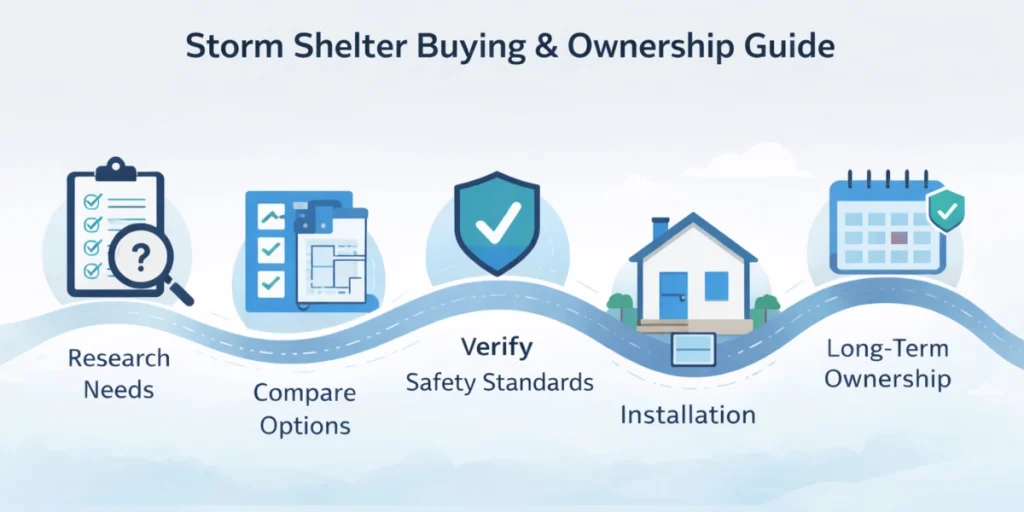
Storm Shelter Buying Guide
This storm shelter buying guide serves as a central hub for homeowners researching storm shelters. It outlines the major decisions involved in buying and owning a storm shelter and points you to in-depth resources that explore each topic in detail.
For a complete, step-by-step walkthrough of the entire process, start here:
👉 The Ultimate Home Storm Shelter Guide: What Homeowners Need To Know
My goal is not to push a purchase decision. I am not affiliated with any storm shelter manufacturer or retailer. My goal is to provide clear, practical, unbiased guidance so homeowners can make an informed decision based on research, standards, and real-world considerations, not on emotions, fear, or sales pitches.
Do You Really Need a Storm Shelter?
The first question to explore is whether a storm shelter even makes sense for your specific situation. Not every home needs a storm shelter, but many homeowners benefit from understanding the limitations of alternatives.
Interior closets, bathrooms, and hallways are often recommended as “safe places,” but they are not designed or tested to withstand extreme wind pressures or high-speed debris impacts. In contrast, a properly designed storm shelter is engineered specifically to protect occupants during violent wind events.
In my article, “Do I Even Need A Storm Shelter?“, I explore numerous factors to consider when exploring if a storm shelter makes sense in your situation. I look at factors such as your geographic location, the frequency and intensity of storms in your area, your home structure, your family needs, the feasibility of installing a storm shelter in your home, and costs.
👉 Read More: Do I Even Need A Storm Shelter?
After reading this article, you should have a better idea of if you need a storm shelter.
Types of Home Storm Shelters Explained
Storm shelters generally fall into two broad categories: above-ground and below-ground. Within those categories are multiple configurations, including garage-installed and yard-installed shelters.
What’s important to understand early in the research process is that shelter type alone does not determine safety. Shelter design, testing, anchoring, and installation quality matter far more than whether a shelter is above or below ground.
Above-Ground Storm Shelters
Above-ground shelters are commonly installed inside a garage, within the home, or outside on an exterior slab. They are often chosen for their accessibility and ease of entry, particularly for households with children, seniors, or mobility challenges.
👉 Read More: Is an Above-Ground Storm Shelter Really Safe?
Below-Ground Storm Shelters
Below-ground shelters are installed beneath the ground, either in a yard or under a garage slab. While they may feel intuitively safer to some homeowners, they introduce additional considerations such as drainage, moisture control, and safe entry and exit.
👉 Read More: Underground Garage Storm Shelters: Pros and Cons
Which Type of Storm Shelter Is the Safest?
This is one of the most frequently asked questions from homeowners. It’s also one of the most misunderstood topics.
Here’s the simple truth: t here is no universally “safest” shelter type based solely on location.
A properly designed and installed above-ground shelter will offer the same level of protection as a below-ground shelter when it meets ICC 500 and FEMA guidelines. In fact, FEMA states, “If a safe room meets all of the requirements of FEMA P-361, an above-ground safe room is just as safe as a below-ground or in-ground safe room” (Taking Shelter from the Storm: Building or Installing a Safe Room for Your Home, FEMA P-320, December 2024, 29).
Safety depends on:
- Structural design
- Testing and certification
- Anchoring method
- Installation quality
- Proper use and maintenance
Focusing only on whether a shelter is above or below ground often distracts from the factors that truly matter.
👉 Read More: Which Type of Home Storm Shelter Is the Safest?
How Big Should a Storm Shelter Be?
Shelter size is both a safety and usability decision. A shelter that is too small can be difficult to enter quickly, uncomfortable during use, or unsafe for households with mobility needs.
When planning size, consider:
- Number of occupants
- Number and size of pets
- Family members who have mobility aids or use wheelchairs
- Supplies that will be stored inside the shelter
- Additional equipment you may want to have in the shelter (mobile AC units, television, etc.)
- How easily everyone can enter and exit
Undersizing to save money is a common regret. It’s usually better to plan for realistic use rather than minimum occupancy.
👉 Read More: How Much Space Do I Need in a Storm Shelter?
I also created a free storm shelter size calculator that will give you a recommended size based on numerous factors, such as family size, mobility considerations, pets, optional supplies or comfort items, and the type of weather event (tornado sheltering, hurricane sheltering).
What Upgrades Or Options Do I Need?

Once homeowners decide that a storm shelter makes sense, the next common question is which optional features or upgrades are truly necessary. This is also where many buyers feel the most uncertainty, as shelters are often presented with a wide range of add-ons during the purchasing process.
A practical way to approach this decision is to distinguish between options that must be decided at the time of purchase, such as door placement, interior layout, or built-in seating, and upgrades that can be added later, often at lower cost and with greater flexibility. Comfort and convenience items, including lighting, fans, emergency supplies, or electronics, are rarely required to be purchased with the shelter itself.
Understanding this distinction helps homeowners prioritize safety and accessibility first, avoid unnecessary upgrades, and plan improvements over time based on real-world use rather than assumptions made during the buying process.
👉 Read More: Storm Shelter Options and Upgrades: Which Features to Choose Now and Which Can Wait
How Much Does a Storm Shelter Cost?
Cost is often one of the biggest unknowns in storm shelter planning. Prices vary widely depending on shelter type, size, upgrade options, installation complexity, and site-specific conditions. Factors that influence cost include:
- Shelter size and type
- Shelter construction materials
- Installation and site conditions
- Excavation and drainage requirements
- Delivery fees
- Local labor and permitting requirements
Many homeowners are surprised to learn that storm shelters are often comparable in cost to other major home improvements and that financing or assistance programs may be available in some areas. In the article below, I go into more detail on pricing ranges, financing options, and potential grants or rebates that may apply in some areas.
👉 Read More: How Much Does a Storm Shelter Cost? A Practical Analysis
Buying A Storm Shelter: Critical Considerations
Okay, so you’ve determined that a storm shelter makes sense for your home. You’ve decided on the type of shelter (above-ground, below-ground, garage, etc.) that best meets your needs. And you’ve reviewed the preliminary cost ranges to at least get a general idea of how much a shelter will cost.
Now, you’re ready to visit several showrooms to narrow down the options and make your decision. To restate an earlier sentence: the buying decision should be based on research, standards, and real-world considerations, not on emotions, fear, or sales pitches.
A careful and thoughtful buying process reduces the risk of discovering a shelter’s limitations only after it has been installed.
👉 Read More: Buying a Storm Shelter: 10 Important Factors to Know
Making a Confident, Informed Decision
A storm shelter is not something most homeowners hope to use—but it is something they want to trust completely if the time comes.
The best decisions are made with:
- Clear information
- Realistic expectations
- An understanding of tradeoffs
- A focus on safety over sales pressure
After the Installation – Keeping Your Shelter Ready for Use
Owning a storm shelter does not end with installation. Like any safety system, storm shelters require ongoing attention to remain clean and ready to use.
Ownership considerations include:
- Periodic inspection of doors and hardware
- Moisture and humidity control
- Keeping entry points clear
- Stocking emergency supplies
- Ensuring all household members know how to use the shelter
Shelters that are ignored after installation may be difficult or unpleasant to use when they are most needed.
👉 Read More: Storm Shelter Supplies Checklist: How to Weather the Storm
👉 Read More: Important Storm Shelter Maintenance Tips for Safety and Longevity
I hope this storm shelter buying guide serves as a practical, reliable starting point for your research. Use it to understand the key decisions involved, explore the related resources that apply to your situation, and take the time needed to make a choice based on safety, clarity, and long-term usability…not based on a sense of urgency or on high-pressure sales tactics.
If you have any questions along the way, please feel free to give me a shout.