
✅ Quick Answer: How Much Does A Storm Shelter Cost?
Most home storm shelters cost between $2,000 and $30,000 or more, falling into three general ranges: $2,000–$6,000 (low), $6,000–$12,000 (mid), and $12,000–$30,000+ (high). Above-ground shelters are usually the most affordable, especially when installed on an existing concrete slab or in a garage. Underground shelters typically cost more because of excavation, drainage, and labor. Also budget for permits and inspections (a few hundred dollars to about $1,000) and delivery fees if you live outside the seller’s delivery area.
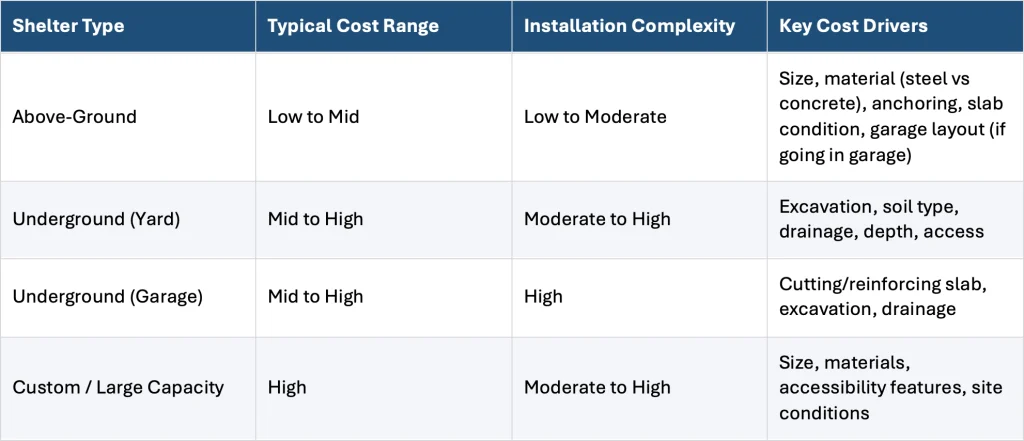
| Shelter Type | Typical Price Range | What Drives the Price? |
|---|---|---|
| Above Ground | Low to mid ($2,000–$12,000) | Size, material (steel vs. concrete), anchoring, slab condition |
| Underground (Yard) | Mid to high ($6,000–$30,000+) | Excavation, soil type, drainage, depth, access |
| Underground (Garage) | Mid to high ($6,000–$30,000+) | Cutting and reinforcing the slab, excavation, drainage |
| Custom / Large Capacity | High ($12,000–$30,000+) | Size, materials, accessibility features, site conditions |
Note: These are general estimates for early budgeting. Actual costs vary by region, installer, site conditions, shelter size, and options. Prices listed online are often “starting at” amounts that exclude taxes and upgrades. Rebates and financing may be available in some areas.
For many homeowners, cost is the biggest unknown when considering a storm shelter. Some assume shelters are prohibitively expensive or only realistic for new construction or high-income households. Others worry about hidden installation costs or ongoing expenses associated with maintaining a storm shelter.
If you’re still building your foundation of storm shelter knowledge, start with my comprehensive Storm Shelter Buying Guide, which explains the key safety standards and decision-making framework every homeowner should understand before comparing costs.
How Much Does A Storm Shelter Cost?
So, how much does a storm shelter cost? In reality, storm shelter pricing is more nuanced, and shelters are often more financially accessible than many people realize. Costs vary widely based on variables such as the type of shelter (above-ground, in-ground), construction material (steel, concrete, fiberglass), shelter size, installation requirements, and site conditions. Construction standards such as ICC 500 help explain why professionally designed shelters involve higher material and installation costs.
Unfortunately, there is no single “average” storm shelter price that I can provide based on my own research. Rather, I find that most residential shelters fall within a fairly predictable range once you understand the factors that drive the overall cost. I go into more explanation on these variables in this article.
Many storm shelter companies list pricing (especially for above-ground shelters) directly on their website. These prices typically do not include taxes and will also exclude optional upgrades. In other words, the pricing shown on the website might be the “starting at” cost.
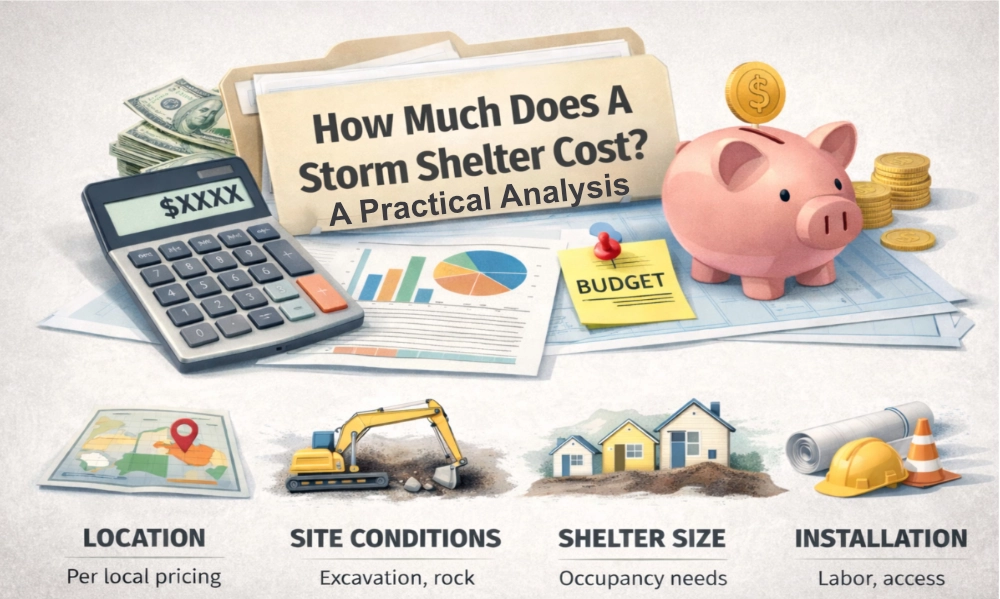
Typical Cost Range:
The cost ranges shown below are based on general research and are intended only as high-level estimates. Actual shelter and installation costs vary by region, site conditions (such as land preparation, excavation, or rock removal), shelter size, and other factors discussed below. These figures should be used for preliminary budgeting purposes only.
- Low Range: $2,000 – $6,000
- Mid-Range: $6,000 – $12,000
- High Range: $12,000 – $30,000+
Using the “Typical Cost Range” and the table below, you can get a general idea of what to expect in terms of cost. Again, prices will vary based on many factors, so don’t automatically assume these ranges will be accurate for your specific needs. Storm shelter manufacturers and resellers in your area will be able to provide more accurate estimates.
Above-Ground Storm Shelters
Above-ground shelters are often the most affordable option, particularly when installed on an existing concrete slab or in a garage.
Homeowners can generally expect:
- Lower starting costs compared to underground options
- Pricing influenced by size, material, and anchoring requirements
- Fewer (if any) excavation-related expenses
These shelters are commonly chosen by homeowners who need accessibility without stairs or ladders, or who live in areas where underground installation is impractical.
Below-Ground Storm Shelters
Underground shelters typically cost more due to excavation, debris removal, drainage planning, and labor.
Cost factors include:
- Excavation depth and soil conditions
- Drainage systems to prevent water intrusion
- Structural reinforcement
- Access and entry design
Underground shelters may be installed in a yard or beneath a garage slab, with garage installations often adding complexity due to cutting and reinforcing concrete.
Garage-Installed Storm Shelters
Garage shelters (both above and below ground) are popular for their convenience and quick access during severe weather.
Costs for garage shelters depend heavily on:
- Whether the shelter is above-ground or below-ground
- Garage slab thickness and reinforcement needs
- Whether the shelter is retrofitted or installed during new construction
What Drives Storm Shelter Costs?
Understanding the factors that influence pricing helps homeowners evaluate quotes and avoid surprises. These factors help to explain why two similar shelters can have very different price tags.
1. Shelter Size and Capacity
Larger shelters cost more due to additional materials and structural reinforcement. Size should be based on:
- Number of occupants (including pets)
- Storage of emergency supplies
- Mobility or accessibility needs – for instance, a person in a wheelchair will require more space and maneuverability
Choosing the right size upfront is often more cost-effective than upgrading later. You can refer to my article, “How Much Space Do I Need In A Storm Shelter?” for information on FEMA space recommendations and example calculations that will help you determine your space needs.
2. Materials and Construction
Most residential shelters are constructed from reinforced steel, concrete, or a combination of both. Some below-ground shelters are constructed of fiberglass. Costs can vary based on:
- Thickness of materials
- Door design and locking mechanisms
- Ventilation systems
Higher-quality materials typically increase upfront cost but may reduce long-term maintenance concerns. Labor availability, material pricing, and regional construction costs can significantly affect overall pricing.
3. Installation and Site Conditions
Installation is often a significant portion of total cost. Variables include:
- Soil type, excavation, and land preparation needs
- Drainage requirements
- Access for equipment
- Existing concrete slab thickness (new slab may need to be poured if the existing slab isn’t suitable)
4. Shelter Options and Upgrades
Another decision that homeowners will need to make is which optional features or upgrades are necessary. This is also where many buyers feel the most uncertainty, as shelters are often presented with a wide range of add-ons during the purchasing process.
In my article, “Storm Shelter Options and Upgrades: Which Features to Choose Now and Which Can Wait?”, I discuss how a practical way to approach this decision is to distinguish between options that must be decided at the time of purchase, such as door placement, interior layout, or built-in seating, and upgrades that can be added later, often at lower cost and with greater flexibility. Comfort and convenience items, including lighting, fans, emergency supplies, or electronics, are rarely required to be purchased with the shelter itself.
Understanding this distinction helps homeowners prioritize safety and accessibility first, avoid unnecessary upgrades, and plan improvements over time.
5. Delivery Costs
Prices you see online will typically include delivery within a certain radius of the reseller’s or the manufacturer’s location, such as 50 miles. Additional fees may apply for installations outside the given range, usually on a per-mile basis. Be sure to ask about delivery fees and whether the delivery range is based on the retail location or the manufacturing facility. Depending on the distance to your home, the delivery fee could add hundreds of dollars to the overall cost.
Permits, Inspections, and Local Requirements
Some municipalities require permits or inspections for storm shelter installation, especially for underground or garage-installed units.
Possible costs include:
- Permit fees
- Engineering approvals
- Final inspections
Requirements vary by location, so homeowners should verify local rules early in the planning process. These costs typically range from a few hundred dollars to a thousand dollars, so they should be taken into account for the overall budget.
Possible Rebates
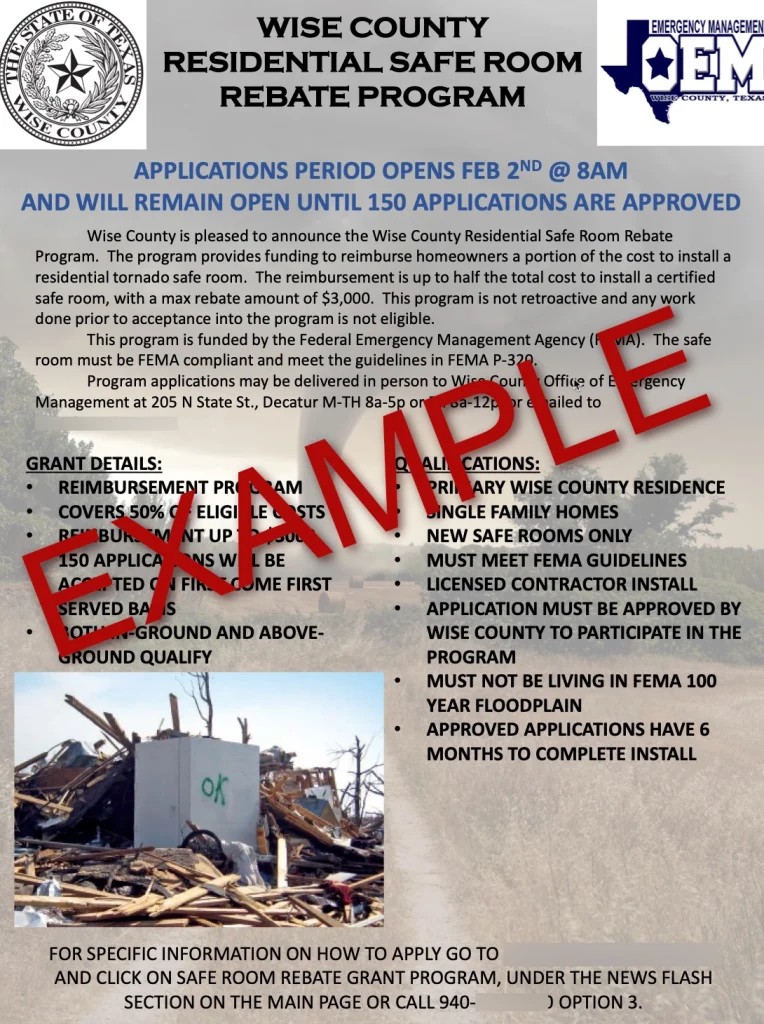
In some tornado-prone areas, homeowners may qualify for rebates or grants related to storm shelter installation. These programs are often tied to hazard mitigation initiatives and may be offered at the state or local level.
Important considerations:
- Programs are not available everywhere
- Funding is often limited or competitive
- Pre-approval may be required
- Shelters will need to meet specific standards to qualify for rebates
Here is an expired example of a residential safe room rebate program in Wise County, Texas:
To learn if a rebate program is available to homeowners in your area, check with:
- Local emergency management agencies
- State hazard mitigation offices
- County planning or building departments
- The storm shelter manufacturer/reseller you are buying from may also be able to advise you on applicable rebate programs
Even when rebates aren’t available, knowing they exist in some areas helps set realistic expectations.
Financing Options for Storm Shelters
Many homeowners use financing to spread the cost of a storm shelter over time rather than paying the full amount up-front. This approach can make a storm shelter more financially attainable, especially when installation and site-prep costs are factored in.
Common financing options include:
- Manufacturer or installer payment plans – often with short-term promotional financing, such as 0% or low-interest financing
- Local credit unions or banks – which may offer competitive rates for home improvement or safety-related projects
While financing can make shelters accessible to a broader range of households, homeowners should carefully review:
- Interest rates
- Loan terms
- Total cost to be paid over the financing period
The goal is affordability without unnecessary financial strain, while still investing in a shelter that meets recognized design and testing standards and long-term family safety needs.
Ongoing Ownership and Maintenance Costs
Storm shelters generally have low ongoing costs, but they are not entirely maintenance-free.
Typical long-term expenses may include:
- Minor repairs to seals, vents, or hardware
- Keeping door hinges, locks, rollers, etc. lubricated
- Replacing batteries and other items that have an expiration date
- Moisture control products
These costs are usually minimal compared to the initial installation and are best viewed as part of routine home safety maintenance. You can review my article, “Important Storm Shelter Maintenance Tips For Safety and Longevity,” for more information on shelter upkeep.
Additional Resources
Homeowners interested in learning more about storm shelter costs, financing, mitigation programs, and the construction standards that impact overall storm shelter cost may find the following resources helpful:
- FEMA Hazard Mitigation Assistance Programs
- Ready.gov Tornado Preparedness
- U.S. Small Business Administration Disaster Loan Programs
- International Code Council (ICC 500 Standard Overview)
Thinking About the Cost in Context
When evaluating the cost of a storm shelter, it may help to look beyond the price tag and consider the frequency of tornado warnings in your area, and the long-term peace of mind a shelter will provide. A storm shelter is not a purchase homeowners hope to use often, but it is one designed for moments when preparedness matters most.
What factors are most important in your situation when deciding whether a storm shelter is worth the cost? What questions do you still have about storm shelter costs or installation that you haven’t been able to find clear answers to yet? Please comment below or contact me directly.