
Tornadoes remain among the most mysterious and misunderstood natural disasters homeowners face, even as scientists continue to learn more about how they form and behave. Much of what we believe about tornado safety is shaped by movies (any Twister fans?), outdated guidance, and well-intentioned advice passed down from generation to generation. These common tornado myths often feel logical, but modern research and real storm data tell a very different story.
Tornado myths do more than create confusion. They can lead people to make unsafe decisions, delay sheltering, or rely on false assumptions at a time when precious seconds matter most. Replacing myths with accurate, up-to-date information is one of the best ways homeowners can reduce risk and stay safe when severe weather strikes.
Below are some of the most common myths homeowners still believe today, along with the facts modern research and storm damage surveys have revealed.
Myth #1: Tornadoes Only Happen in Tornado Alley and Dixie Alley
Reality: Tornadoes occur in all 50 states.
While Tornado Alley and Dixie Alley receive the most attention, according to NOAA National Severe Storm Laboratory, tornadoes have been recorded in every U.S. state. Homeowners outside these tornado-prone regions often underestimate their risk, assuming tornadoes are unlikely where they live.
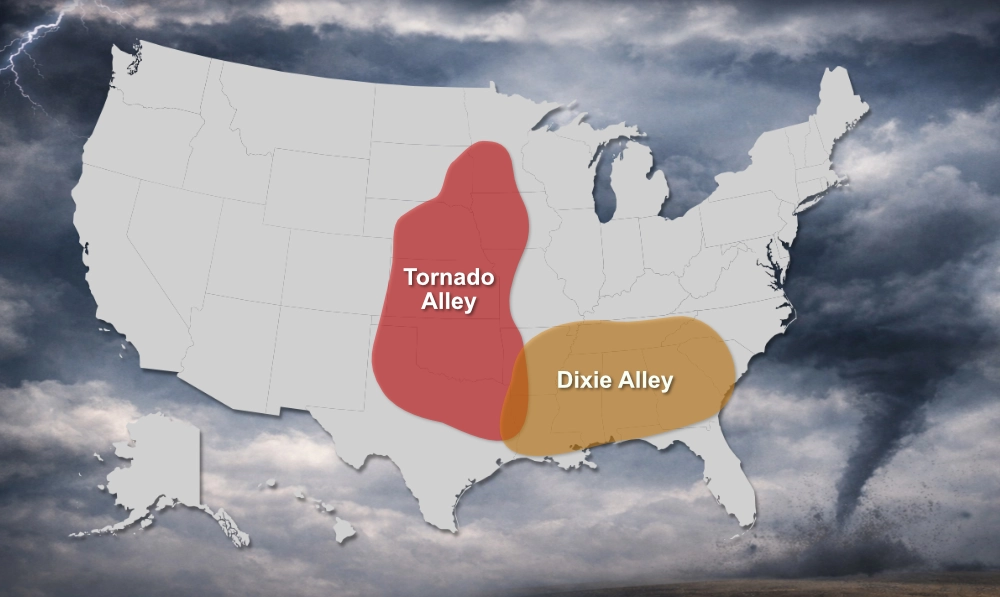
When tornadoes strike in less-frequent areas, communities are often less prepared, and warning response may be slower. Preparedness should be based on possibility, not geography.
👉 My article, Tornado Alley vs. Dixie Alley: What You Need to Know, will teach you more about regional tornado risks.
Myth #2: Opening Windows Reduces Pressure Damage
Reality: Opening windows wastes critical sheltering time and offers no protection.
This myth originated from early theories of pressure equalization. Modern research shows that opening windows does not prevent structural failure. In fact, it may lead to more damage as dangerous winds rush through the house. Plus, taking time to open windows will delay you from getting to shelter.
When a tornado approaches, seek immediate shelter. Do not waste time opening windows.
Myth #3: Overpasses Are Safe Shelter During a Tornado
Reality: Overpasses increase wind speed and debris exposure.
Overpasses create a tunnel effect that accelerates wind and funnels debris. People sheltering underneath an overpass are often directly exposed to violent tornado winds that can exceed 200 mph and flying debris, with no real protection. Numerous tornado injuries and fatalities have occurred under overpasses.
Myth #4: Small Tornadoes Are Less Dangerous
Reality: Tornado size does not determine danger.
It’s easy to assume that a large, wide tornado must be more dangerous than a narrow or rope-like one. In reality, small tornadoes can be just as deadly as large tornadoes.
A tornado’s appearance tells you very little about what is happening inside it. Narrow tornadoes can still contain extreme wind speeds capable of collapsing structures, overturning vehicles, and turning everyday objects into lethal missiles. In many cases, these smaller tornadoes move quickly, change direction abruptly, and give people even less time to react.
Location also plays a critical role. A narrow tornado crossing open fields may cause little damage, while the same tornado moving through a neighborhood can produce devastating results. The difference is not the tornado’s size, but what the tornado encounters along its path.
Wind speed, debris availability, construction quality, and population exposure matter far more than how wide a tornado looks from a distance. This is why no tornado should ever be dismissed based on appearance alone.
Myth #5: Mobile Homes Are Safe If Anchored
Reality: Anchoring improves stability but does not provide debris protection.
Anchors may reduce sliding or overturning, but they do not protect against high-speed debris or structural collapse. Mobile homes remain among the most vulnerable structures during tornadoes.
Myth #6: You Can Outrun a Tornado in a Car
Reality: Traffic, debris, and unpredictable paths make escape extremely dangerous.
If you are far away and see a tornado approaching, driving in a path perpendicular (90-degrees) from the storm may be an option, but experts recommend that you not try to outrun the storm and instead seek shelter. Remember, tornadoes do not follow roads, and they can change direction in an instant. Roads can become congested with downed trees, power lines, and other debris. Visibility is greatly reduced as the tornado approaches, and debris will become airborne. Many tornadoes are capable of tossing cars like toys, and many tornado injuries and deaths occur in vehicles.
In most situations, shelter is safer than escape.
Myth #7: Tornado Sirens Can Always Be Heard Indoors
Reality: Sirens are designed for outdoor alerting only.
Sirens are outdoor warning systems and are not intended to wake sleeping homeowners or penetrate walls and closed windows. Indoor alerts should come from weather radios, mobile alerts, and emergency notifications. Do not rely on local tornado sirens.
Myth #8: If It’s Only an EF-1, You’re Safe
Reality: EF ratings are assigned after the storm and do not reflect real-time danger.
The EF rating is based on damage surveys after the tornado has passed. It cannot be used to judge safety during the event.
Even EF-0 and EF-1 tornadoes regularly cause injuries, fatalities, and major property damage.
👉 To understand how EF ratings are assigned and why they are often misunderstood, read my article, “What Is the EF Scale? What Homeowners Should Know.”
Myth #9: The Southwest Corner Is Always the Safest Spot
Reality: No corner of a building is universally safe.
Older guidance to get to the southwest corner of a home or building is based on outdated theories, and this is a dangerous myth. Tornado winds and debris are chaotic and unpredictable, and no particular corner is safer than another. If you do not have a storm shelter or safe room, then being on the lowest level of the building, in an interior closet or bathroom with no windows, will be the safest location to take shelter.
Myth #10: A Basement Is Always Safe
Reality: Basements are safer than above-grade locations, but still require proper positioning.
Basements reduce wind exposure, but debris can still enter through stairwells, window wells, and above-grade walls. Structural collapse is also a very real risk. Occupants should avoid windows, exterior walls, and unsecured objects.
Myth #11: Tornadoes Avoid Cities
Reality: Tornadoes follow weather patterns, not population.
Urban tornadoes have produced some of the most destructive and deadly events in history. Cities offer more damage indicators, not more protection. Here are two examples.
- Nashville, Tennessee (March 3, 2020) – living in Middle Tennessee, I vividly recall witnessing the aftermath of this EF-3 tornado that tore through Nashville and surrounding towns. It was one of 10 tornadoes that struck Tennessee on March 2-3, 2020. In all, this tornado outbreak killed 25 people. The Nashville tornado was on the ground for a little more than one hour, cutting a swath 60 miles long. It took five lives. You can see an interactive flyover of the storm path and damage at the Tennessean.
- St. Louis, Missouri (May 16, 2025) – an EF-3 tornado carved a path 20 miles long, including the northern part of St. Louis. It killed five people, injured 38, and caused an estimated $1.6 billion in damage. You can see the path of the St. Louis tornado at the National Weather Service
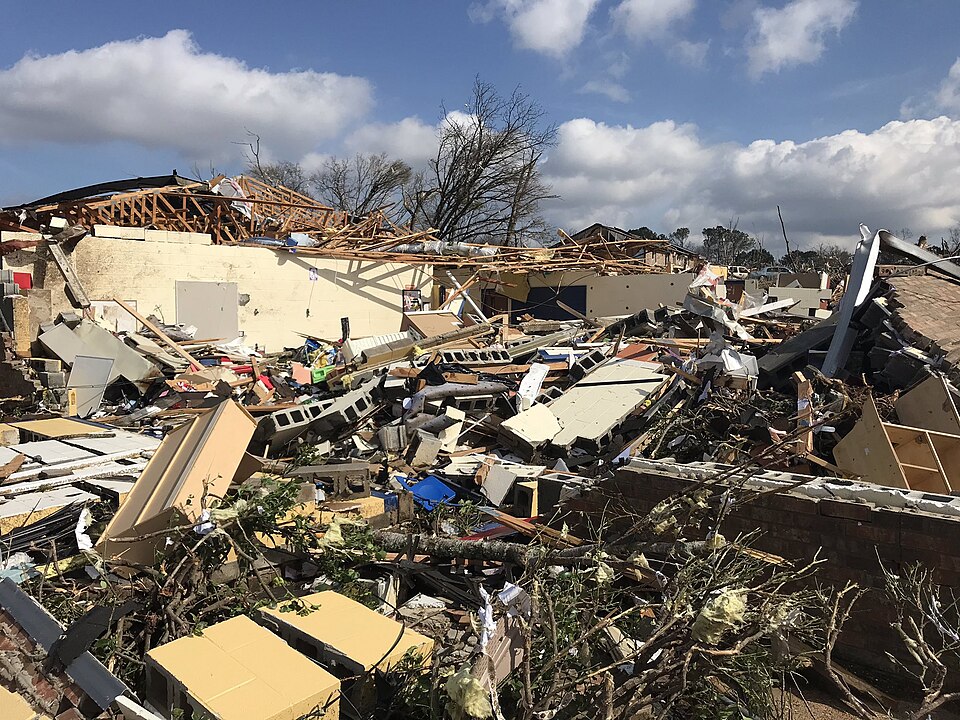
A similar myth states that tornadoes avoid hills, mountains, rivers, lakes, or other bodies of water. This is simply false. Tornadoes can strike anywhere at any time.
Myth #12: My House Is Strong Enough for Most Tornadoes
Reality: Most homes are not engineered for tornado debris and wind loads.
Residential homes are not designed to withstand the violent winds and high-speed debris impact of tornadoes. Roofs, windows, garage doors, and walls often fail long before a tornado reaches peak strength.
Final Thoughts: Replacing Common Tornado Myths With Real Preparedness
Tornado safety is not a checklist to memorize or a set of shortcuts to follow. It is a mindset built on understanding how storms behave, how buildings respond, and how injuries occur. When homeowners rely on accurate information instead of outdated myths and assumptions, they gain perspective.
No one can control when or where a tornado will form. But everyone can control how prepared they are when it does. Preparation is not about predicting the storm. It is about reducing exposure, improving response, and making decisions that protect the people who matter most.
Preparedness replaces fear with clarity. And clarity saves lives.
👉 If you are exploring storm shelter options, my Storm Shelter Buying Guide explains shelter types, key considerations, safety standards, installation factors, and more.
Which tornado myth surprised you the most? What tornado safety advice did you grow up hearing that you now question? Please comment below, or you can contact me directly with any questions.