
For many homeowners, the idea of an underground garage storm shelter seems like the perfect solution. An underground garage storm shelter is designed to provide safety and convenience, quick access during an emergency, built-in protection below the ground surface, and an installation that doesn’t take up valuable garage or yard space. And for the most part, these storm shelters deliver. However, like all types of storm shelters, they come with unique advantages and disadvantages.
This article takes a deep dive into the pros and cons of underground garage shelters. I’ll explain situations where this shelter type works well, and situations where it might not be the right fit.
Before deciding on a specific shelter type, many homeowners find it helpful to review my comprehensive Storm Shelter Buying Guide to understand key safety standards and how different shelter choices fit into the bigger picture of tornado protection.
What Is an Underground Garage Storm Shelter?
An underground garage storm shelter is installed in the ground with the top and entrance flush with the garage floor. They are typically made of reinforced steel or concrete and have a rolling door that easily opens to allow access to steps or a ladder leading into the shelter. In addition to the rolling door, these shelters often include a hatch that can be opened with the aid of a multi-ton jack if heavy debris (or a car) prevents the sliding door from opening following a tornado.
During a severe weather event, you and your family can quickly retreat into the garage, open the sliding door, climb down into the below-ground shelter, and close the door. Shelters engineered to meet FEMA and ICC 500 standards are built to withstand the extreme winds and flying debris of an EF5 tornado.
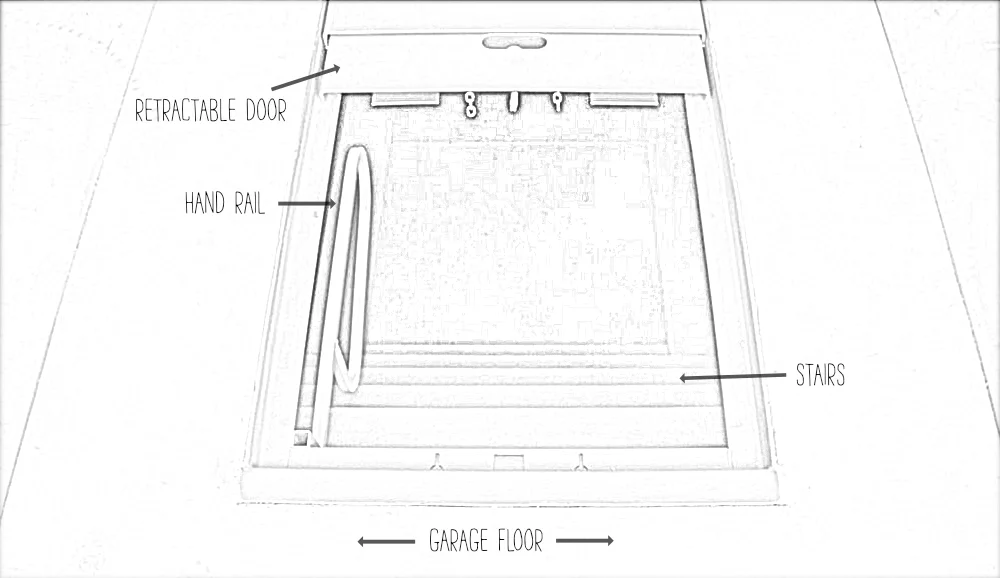
To show an example of an underground garage shelter, I’m adding a link to Oklahoma Shelters. This company manufactures underground garage storm shelters, among other types of shelters. I’m sharing this link as a real-world example of an underground garage shelter. I’m not connected with this company, I don’t earn anything if you click the link, and this isn’t an endorsement…it’s just for illustrative purposes.
The Advantages of Underground Garage Storm Shelters
There are many pros of an underground garage shelter. I’ll explore several below.
1. Proximity and Convenience
One of the biggest benefits of an underground garage shelter is that it’s located inside the home’s footprint. During a storm, you don’t have to run outside to reach safety. This is especially important when outside conditions (hail, lightning, or heavy rain) make outdoor access dangerous. Plus, tornadoes can form quickly, leaving very little time to seek shelter.
2. Space-Saving Design
Unlike above-ground safe rooms or backyard storm shelters, an underground garage shelter doesn’t take up space in the yard, garage, or basement. It’s hidden beneath the garage floor, freeing up valuable space. For homeowners with smaller lots or HOA restrictions, this is a big advantage.
3. Superior Protection From Flying Debris
Being underground provides a natural buffer against high winds. Flying debris is less likely to reach below-ground shelters, and soil reinforcement adds structural stability. In many cases, families feel an added sense of security knowing they are literally beneath the surface.
4. Discreet and Secure
Garage shelters are not easily visible to neighbors or passersby, unlike freestanding shelters. For some homeowners, this adds a layer of privacy and security.
5. Boost Home Resale Value
In tornado-prone regions, homes with storm shelters often appeal to buyers. An underground garage shelter can be a selling point, especially for families relocating to areas like Tornado Alley or Dixie Alley.
6. Bonus Potential Use: Automobile Mechanic’s Pit
Some homeowners also use the underground garage shelter as a mechanic pit for maintenance tasks like changing the oil!
The Drawbacks of Underground Garage Shelters
While an underground garage shelter does have several distinct advantages, there are also several disadvantages to consider.
1. Accessibility Challenges
Perhaps the biggest drawback is accessibility. Entry requires sliding a door or lifting a hatch and climbing down stairs or a ladder to reach the safety of the shelter. For families with elderly members, very young children, or individuals with mobility challenges, this can be unsafe or impractical.
2. Flooding Risk
Since these shelters are installed below ground, they can be vulnerable to water intrusion from the entrance. Heavy rainfall or poor drainage around the home may lead to flooding inside the garage and shelter, rendering it potentially unusable during critical times. These shelters may not be suitable for areas with a high water table or in areas that are prone to flooding.
3. Limited Space
Most underground garage shelters are compact and designed to fit several people for short durations. While they provide lifesaving protection, they may feel cramped, especially if you need to shelter with pets, emergency supplies, or many family members. Additionally, many underground garage storm shelters have a lower ceiling height that can make some people feel claustrophobic.
4. Garage Vehicle Clearance
Installing a shelter beneath a garage floor can reduce available parking space or require careful automobile placement. While vehicles “straddle” the shelter so it is underneath the car, it will require the car to be positioned in a way that enables quick access to the shelter entrance. Oklahoma Shelters has several good photos on the website that shows a car parked normally in the garage (with the shelter not accessible), and with the car pulled forward to allow quick access to the shelter during bad weather.
5. Potentially Higher Installation Costs
Underground shelters may have a higher installation costs than above-ground shelters. Installation requires removing part of the existing garage slab, excavation of soil (and potentially rock), installing the shelter, and backfilling with concrete to ensure a solid foundation. If you live in a particularly rocky area, there may be additional costs to excavate the rock.
Tips for Making an Underground Garage Shelter More Practical
- Plan for Accessibility: know how you will position your car to ensure easy access to shelter when severe weather is in the forecast. Also, add non-slip grips to steps (if not carpeted) or ladder to reduce the chance of falls.
- Address Drainage: work with installers to ensure proper drainage and waterproofing are in place. A sump pump may be necessary.
- Stock Essentials: Keep emergency supplies ready inside the shelter. Rotate items seasonally. Check out this article on keeping your shelter stocked and ready.
- Practice Drills: Run family drills so everyone knows how to enter quickly and safely, including pets.
- Check Maintenance Regularly: Inspect the sliding door rollers, emergency hatch and jack, door seals, and ventilation systems at least twice a year. Take a look at this article for more tips on maintaining your storm shelter.
Alternatives to Underground Garage Shelters
If you determine that a below-ground shelter isn’t the right fit, you have other equally safe alternatives. I wrote a separate article that looks at the pros and cons of each type.
- Above-Ground Storm Shelter: Installed in a garage, basement, home interior, or on a concrete slab in the yard. These shelters are wheelchair accessible and often provide more space to meet the space needs or larger families. They may also work better for families with pets.
- Outdoor Underground Shelters: Placed in yards or near patios, these can offer larger space but may still face flooding concerns and challenges for individuals with mobility restrictions.
- Community Shelters: In some regions, municipalities provide neighborhood safe rooms for residents without home-based shelters.
Final Thoughts
Underground garage shelters offer an appealing balance of convenience, safety, and low-profile, discreet installation. For many households, they are the perfect fit. However, they are not a “one-size-fits-all” solution. Families with mobility concerns, flood-prone properties, or larger household needs may want to explore above-ground storm shelters or larger underground shelter options.
The best storm shelter is the one that meets your specific needs. I encourage you to visit the showrooms of local storm shelter companies so you can see and experience the various shelter types first-hand.
Are you considering an underground garage shelter? If so, what are the key factors in your decision? What other factors should I include in the list to help other homeowners in their decision-making process? Comment on this article or contact me directly.