
If you’re early in the research process, start with my Storm Shelter Buying Guide, which walks through whether a shelter makes sense, how to choose one, and what ownership really involves.
When researching or planning for a storm shelter, most homeowners focus first on the big questions, such as “Do I need one?”, “Which type do I need?”, and “How much will it cost?” Many storm shelter manufacturers offer optional features and upgrades, which are often presented as part of the buying process.
Not all storm shelter options are created equal. Some features must be decided at the time of purchase because they are built into the shelter’s design or fabrication. Others can be added later, and sometimes at a fraction of the cost and with far more flexibility.
Understanding this distinction early helps homeowners avoid unnecessary upgrades and costs, enabling them to focus their budget where it matters most.
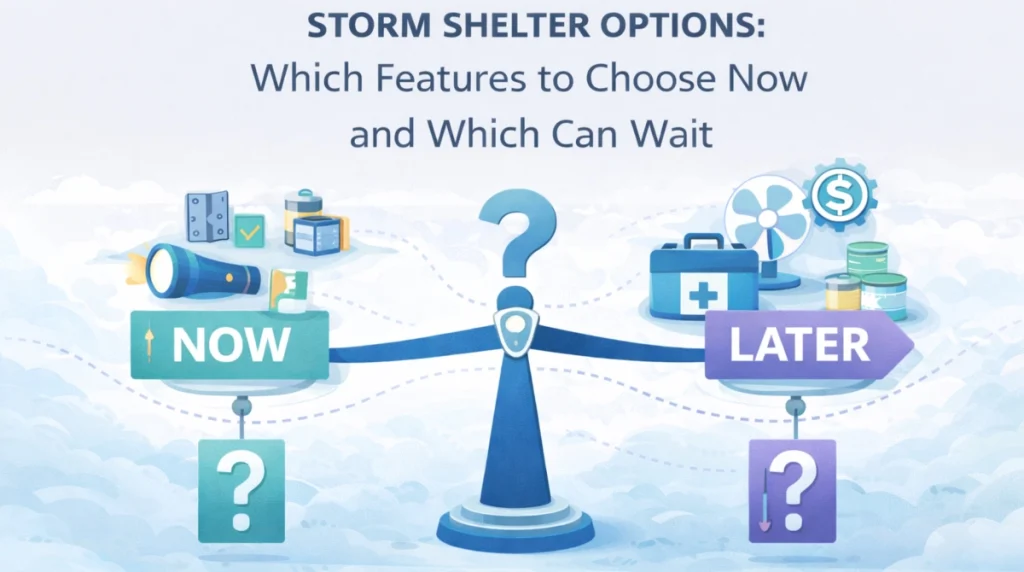
A Practical Framework for Evaluating Storm Shelter Options
Before diving into specific features, it helps to reframe the question.
Instead of asking:
“What upgrades should I buy?”
A better question is:
“Which options must be decided up front, and which can be added later if needed?”
Some upgrades are simple and homeowner-friendly. Others are more complex and may require professional installation.
Options That Typically Must Be Decided at the Time of Purchase
These options affect the shelter’s structure, layout, or fabrication. If you want them, they usually need to be included when the shelter is ordered.
Door Placement and Orientation
Door configuration is one of the most common (and most overlooked) upfront decisions.
Examples include:
- Hinge side
- Door location on the shelter wall
- Entry height relative to slab or floor
These choices affect:
- Ease of entry during an emergency
- Accessibility for children, seniors, or mobility-challenged users
- How the shelter fits within a garage or interior space
Because door placement is part of the shelter’s structural design, changing it later is usually impractical.
Built-In Seating or Storage Benches
Some manufacturers offer:
- Fixed wall-mounted benches
- Integrated storage seating
- Fold-down seating systems
Because these are welded or bolted into the shelter during fabrication, they must be selected at purchase.
Built-in seating can:
- Improve comfort during longer shelter stays
- Keep occupants off the floor
- Reduce clutter during use
However, they also reduce flexibility. Homeowners who prefer removable or adjustable seating may want to consider skipping built-ins and adding seating later.
Accessibility Modifications
Accessibility-related features almost always need to be addressed early.
Examples include:
- Wider entry openings
- Modified thresholds
- Interior clearance for wheelchairs
- Handholds or grab points
If mobility is a concern for any household member, these options should be discussed before ordering the shelter. Retrofitting may not be possible.
Ventilation Design and Placement
Ventilation criteria (number, size, and placement) are specified in ICC 500 and must be followed as part of the shelter’s design certification. All modern shelters purchased through a reputable provider will meet or exceed the ICC 500 standard. So, this section is referring to ventilation upgrades, such as adding vents or adding an HVAC attachment. Vent placement and size are usually fixed at the time of fabrication.
Upgrades That Can Be Added After Installation
Many upgrades focus on comfort, convenience, or preparedness and are often best added after purchase and installation. However, some providers may offer pricing incentives that make purchasing them upfront more cost-effective.
Lighting Options
Lighting is one of the easiest post-install upgrades.
Common choices include:
- Battery-powered LED lights
- Rechargeable lanterns
- Motion-activated lights
These options:
- Require no wiring
- Are inexpensive
- Can be replaced or upgraded easily
For most homeowners, there’s little reason to pay a premium for built-in lighting unless it’s part of a broader electrical system.
Fans and Air Circulation
Battery-powered or USB-powered fans are widely available and easy to add.
Benefits include:
- Improved comfort
- Better airflow during extended shelter use
- Minimal installation effort
For most households, portable fans offer sufficient flexibility without committing to permanent electrical components.
Television and Weather Monitoring Devices
Some homeowners choose to include a small television or monitor in their storm shelter to stay informed during severe weather events. This can be especially useful during extended warnings or outbreaks when conditions are changing rapidly.
In most cases, a television does not need to be built into the shelter and can be added later if desired.
Common approaches include:
- Small, portable televisions
- Tablets or mobile devices streaming local weather coverage
- Battery-powered or power-station-supported displays
Important considerations include:
- Power availability
- Ventilation and heat generation
- Signal reliability during severe weather
For many households, a weather radio or mobile device provides sufficient situational awareness, making a television a convenience rather than a necessity. Keep in mind that television and radio signals may be severely limited in a closed storm shelter and may require an external antenna.
Portable Cooling and Temperature Control Options
Heat buildup is a concern for some homeowners, particularly in above-ground shelters or during warmer months. While permanent HVAC solutions are rarely practical, portable cooling options are sometimes considered.
Examples include:
- Battery-powered or USB-powered fans
- Portable evaporative (swamp) coolers
- Small portable AC units (limited use cases)
It’s important to understand that most portable AC units:
- Require significant power
- Produce heat that must be vented
- Are not practical without a robust power solution
For many households, simple air circulation using fans provides meaningful comfort improvements without the complexity or cost of active cooling systems.
Emergency Supplies and Storage
Supplies are almost always better added later.
Examples include:
- Water containers
- First aid kits
- Emergency radios
- Power banks
- Comfort items for children or pets
Waiting allows homeowners to:
- Customize supplies to household needs
- Replace items over time
- Avoid paying manufacturer markups
Moisture Control Solutions
Moisture is a common concern, especially for below-ground shelters.
Post-install options include:
- Moisture absorbers such as DampRid
- Portable dehumidifiers (where power is available)
These solutions are inexpensive and adaptable, making them ideal to add after installation rather than committing to built-in systems prematurely.
Advanced Upgrades: DIY-Friendly vs. More Complex
Some upgrades fall into a gray area. They can be added later, but complexity varies depending on skill level.
Battery Backup Systems and Power Inverters
These systems can power:
- Lights
- Fans
- Radios
- Charging devices
However, they may involve:
- Electrical knowledge
- Proper ventilation
- Battery maintenance
- Safe mounting and wiring
For homeowners comfortable with electrical systems, these can be added post-installation. Others may prefer professional assistance or simpler alternatives like portable power stations.
Power Systems for Electronics and Comfort Devices
Some optional upgrades, such as televisions, portable AC units, or multi-device charging stations, depend heavily on available power.
Options range from:
- Portable battery power stations
- Power banks for small electronics
- Inverters connected to external power sources
- Hardwired electrical systems
The complexity of these systems varies significantly. While some homeowners are comfortable managing battery systems and load limits, others may prefer simpler solutions that support only essential devices like lights, radios, and phone chargers.
When evaluating power-related upgrades, it’s important to match the solution to:
- Your comfort with electrical systems
- Realistic power needs during shelter use
- Maintenance and storage requirements
How to Decide What’s Worth Paying For
When evaluating storm shelter options, ask these key questions:
Does this affect safety or accessibility?
If yes, it deserves priority consideration.
Is this difficult or impossible to add later?
Structural and layout-related options usually fall into this category.
Can this be added later for less cost or more flexibility?
If yes, waiting often makes sense.
A Balanced Approach to Storm Shelter Upgrades
A thoughtful approach to storm shelter options looks like this:
- Decide early on features that affect structure, access, and layout
- Delay comfort and convenience upgrades when possible
- Match complexity to your DIY skill level
- Avoid paying for features you don’t yet understand or need
Storm shelters are long-term safety assets. Taking time to separate must-have-now features from nice-to-have-later upgrades helps ensure your shelter is both practical and adaptable over time.
The best storm shelter is one that fits your household’s needs and not one that is overloaded with unnecessary features. By focusing first on structural decisions and accessibility, then layering in comfort and preparedness upgrades over time, homeowners can build a shelter setup that is safe, usable, and cost-effective.
Comparison Table
The table below summarizes the various options and includes my recommendation for when to add them. Some storm shelter providers may offer “package deals” at various times that include some of the options below.
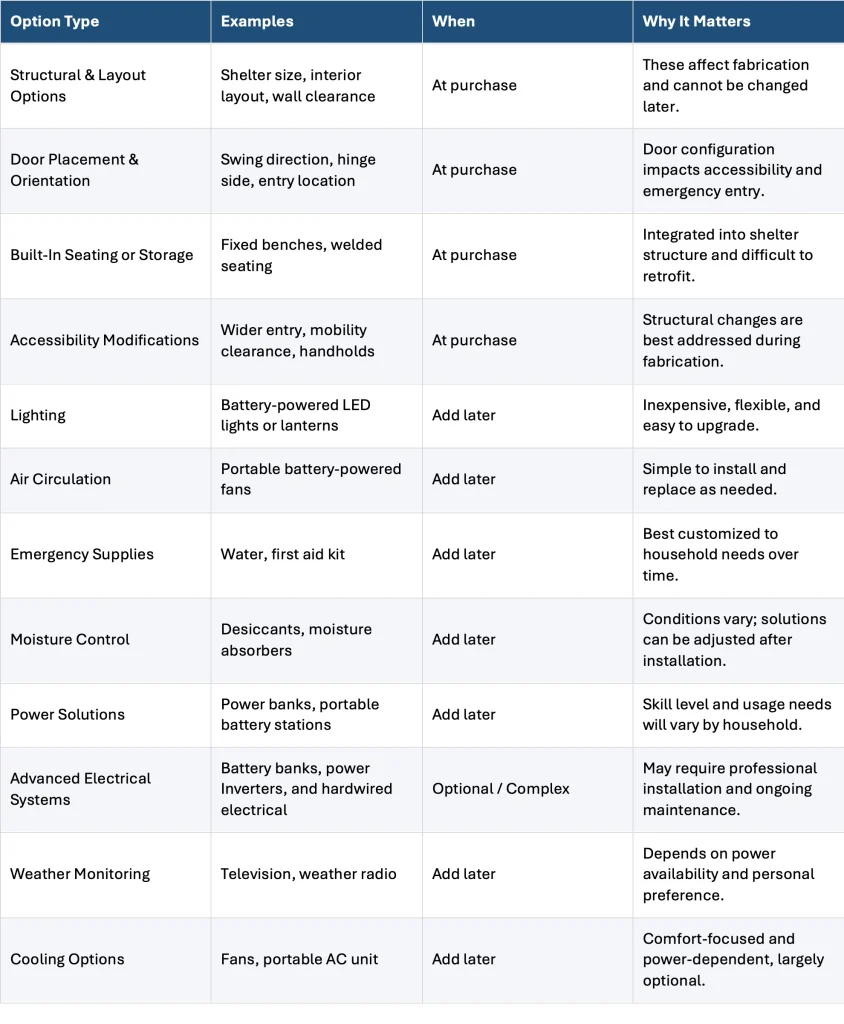
A practical approach is to prioritize options that affect safety, access, or structure at the time of purchase and delay comfort or convenience upgrades until after installation.
Final Thoughts
Every household’s needs are different, and real-world experience often highlights considerations that aren’t obvious during research.
Which storm shelter options or upgrades did you decide to include at the time of purchase, and which ones did you add later? When choosing storm shelter upgrades, what factors matter most to you? Accessibility, comfort, cost, or long-term flexibility? Please feel free to comment below. Or, you can contact me if you have questions.