
Most people in the United States are familiar with the term “Tornado Alley”, a region long known for frequent and powerful tornadoes. However, fewer people are familiar with the more recently coined “Dixie Alley”, which is used to describe parts of the southeastern U.S. that also experience a high number of violent and deadly tornadoes.
While both regions face significant tornado risk, they differ in geography, weather patterns, seasonality, and the challenges they pose for warning and preparedness. Understanding these differences is important for homeowners who may be wondering if they even need a storm shelter.
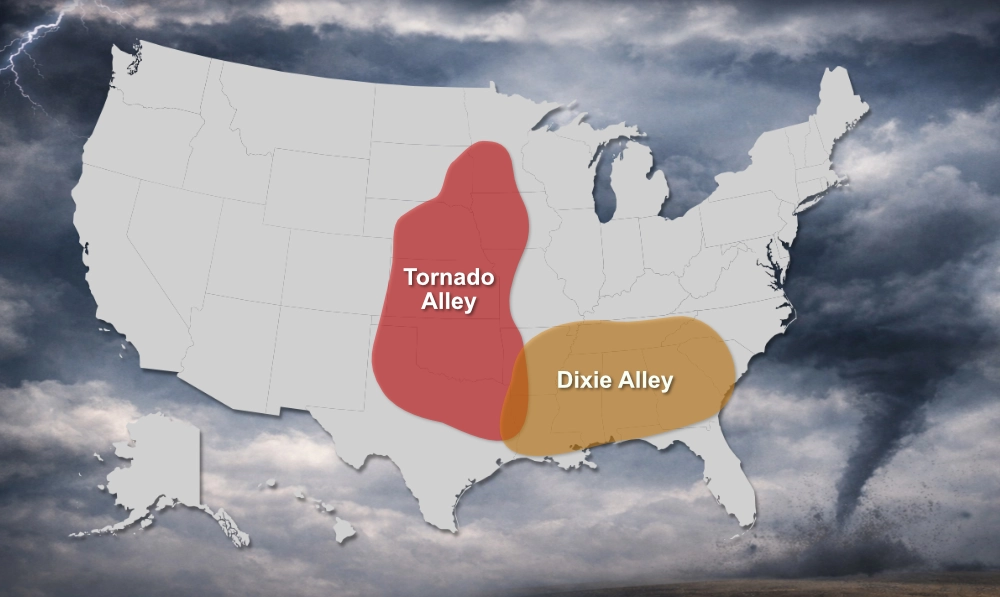
Although the frequency of tornadoes is highest in Tornado Alley and Dixie Alley, it is important to note that tornadoes do occur outside of these regions every year. In fact, according to NOAA, tornadoes occur in and have been reported in all 50 states!
What Is Tornado Alley?
Geographic Location
Tornado Alley traditionally refers to the central Great Plains, including:
- Northern Texas
- Oklahoma
- Kansas
- Nebraska
- South Dakota
However, Tornado Alley has no hard boundaries, and the region may also extend into parts of Colorado, Iowa, Missouri, and even North Dakota.
This area is characterized by flat, open terrain, which allows storms and tornadoes to be more easily observed and tracked.
Tornado Frequency and Intensity
Tornado Alley is known for:
- A high frequency of tornadoes
- Peak activity during spring and early summer
- A large number of strong to violent tornadoes (EF3–EF5)
Many of the longest and most powerful tornadoes on record have occurred in this region.
Weather Patterns
Tornadoes in Tornado Alley are most commonly associated with supercell thunderstorms. These storms often form along dry lines, where:
- Cooler, drier air from the Rockies or High Plains
- Collides with warm, most air from the Gulf of America (or Gulf of Mexico, whichever you prefer!)
This combination creates ideal conditions for long-lived, rotating storms capable of producing intense tornadoes.
What Is Dixie Alley?
Geographic Location
Studies show a trend of tornadic activity shifting eastward. While the traditional Tornado Alley still sees a large number of tornadoes each year, this eastward shift has led to naming the relatively new Dixie Alley, which refers to parts of the southeastern United States, including:
- Mississippi
- Alabama
- Tennessee
- Louisiana
- Georgia
- Parts of Arkansas
Unlike much of Tornado Alley’s open plains, Dixie Alley features forests, rolling hills, and more urban development, which can complicate tornado detection and response.
Tornado Frequency and Timing
Dixie Alley experiences:
- A high frequency of tornadoes
- A broader and less predictable tornado season
- Peaks in late fall, winter, and early spring
Because severe weather can occur outside the traditional “tornado season,” residents may be less prepared.
Weather Patterns
Tornadoes in Dixie Alley are often associated with:
- Squall lines
- Frontal systems
- QLCS (Quasi-Linear Convective Systems)
These systems can produce tornadoes quickly and with less warning than isolated supercells. The region’s constant access to warm, moist Gulf air combined with strong wind shear increases the risk of widespread outbreaks.
Nocturnal Tornadoes
One of Dixie Alley’s most dangerous characteristics is its higher rate of nighttime tornadoes. Tornadoes that occur after dark are especially deadly because:
- Visibility is reduced
- People are often asleep
- Warning response times are shorter
Key Differences Between Tornado Alley and Dixie Alley
Geography and Visibility
- Tornado Alley: Flat terrain makes tornadoes easier to see and track
- Dixie Alley: Forests and hills can obscure tornadoes until they are dangerously close
Seasonal Patterns
- Tornado Alley: Primarily spring to early summer
- Dixie Alley: Late fall through early spring, with activity possible year-round
Tornado Development
- Tornado Alley: More supercell-driven tornadoes
- Dixie Alley: More tornadoes from squall lines and QLCS, often forming rapidly
Nighttime Risk
- Tornado Alley: More daytime events
- Dixie Alley: Significantly higher risk of nighttime tornadoes
Societal Impacts and Vulnerability
Tornado Alley
Tornado Alley includes many rural and sparsely populated areas, which can reduce the number of people directly impacted by individual tornadoes. However, the region’s tornadoes often:
- Travel long distances
- Affect multiple communities
- Cause widespread damage
A long-standing culture of tornado awareness has led many homeowners to prioritize preparedness.
Dixie Alley
Dixie Alley is generally more densely populated and includes many urban and suburban areas. Additional risk factors include:
- A higher prevalence of mobile homes
- Older housing stock in some areas
- More nighttime tornadoes
These factors contribute to higher fatality rates, even when tornado intensity is similar.
Preparedness and Warning Challenges
Both regions benefit from advanced tornado warning systems, but challenges remain.
Tornado Alley
- High tornado frequency has created a strong culture of preparedness
- Many homes include basements or storm shelters
- Residents are generally familiar with tornado safety protocols
Dixie Alley
- Nighttime tornadoes reduce warning effectiveness
- Less predictable seasonality can lead to complacency
- Access to safe shelter is often limited, especially for mobile home residents
Improving public awareness and access to safe shelter options is particularly critical in Dixie Alley.
What This Means for Homeowners
Whether you live in Tornado Alley or Dixie Alley, the threat of tornadoes is very real. The nature of that risk differs.
Homeowners should consider:
- How quickly storms can develop in their region
- Whether tornadoes are likely to occur at night
- The availability of nearby safe shelter
- The limitations of basements or interior rooms
For many households, especially in high-risk areas, a storm shelter can provide a critical layer of protection. If you are thinking about investing in a storm shelter, my article, “Buying a Storm Shelter: 10 Important Factors To Know,” will be worth reading.
Take a look at this short YouTube video from WeatherNation that looks at the differences between Tornado Alley and Dixie Alley.
Bottom Line
Tornado Alley and Dixie Alley are both among the most tornado-prone regions in the United States, but they present distinct challenges. Differences in geography, storm behavior, seasonality, and population density all influence tornado risk and preparedness needs.
By understanding these differences, homeowners can make more informed decisions about safety planning, warning response, and long-term protection strategies. Awareness, preparation, and access to a reliable shelter remain the most effective tools for reducing the devastating impacts of tornadoes, regardless of where you live.
Do you live in Tornado Alley or Dixie Alley? If so, how do you prepare for tornadoes? Please comment below or contact me directly.